
从零开始的RAG:路由
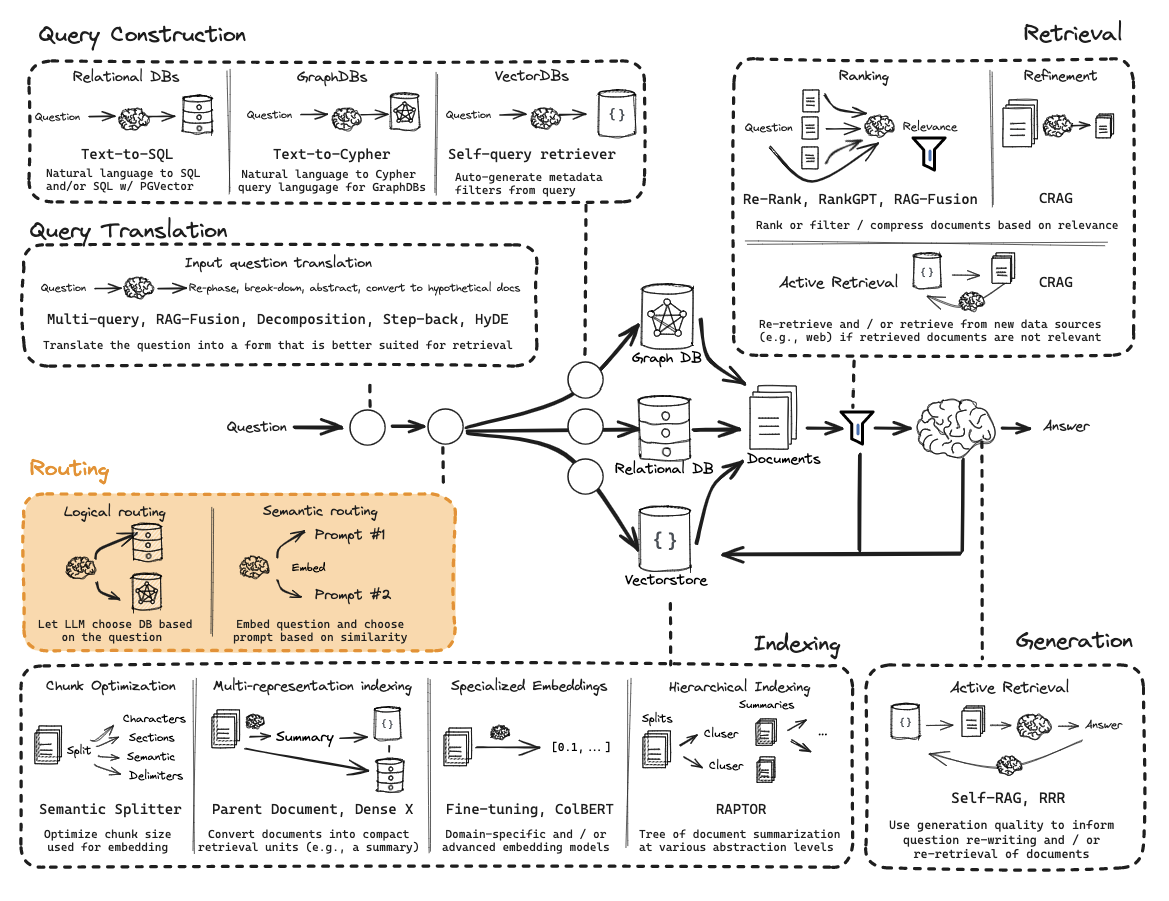
环境
(1) 包
python
! pip install langchain_community tiktoken langchain-openai langchainhub chromadb langchain youtube-transcript-api pytube(2) LangSmith
https://docs.smith.langchain.com/
python
import os
os.environ['LANGCHAIN_TRACING_V2'] = 'true'
os.environ['LANGCHAIN_ENDPOINT'] = 'https://api.smith.langchain.com'
os.environ['LANGCHAIN_API_KEY'] = <your-api-key>
(3) API 密钥
python
os.environ['OPENAI_API_KEY'] = <your-api-key>第10部分:逻辑和语义路由
使用函数调用进行分类。
流程:
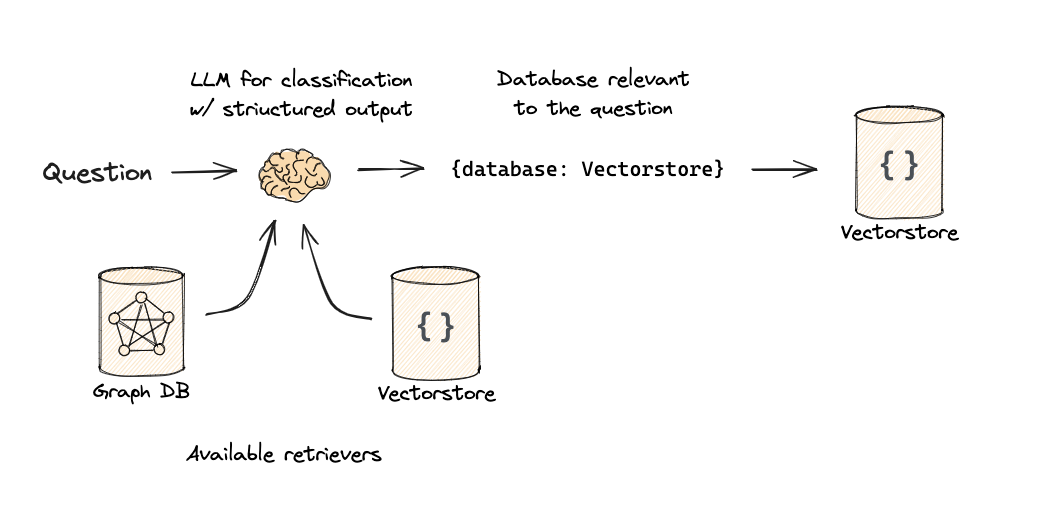
文档:
python
from typing import Literal

from langchain_core.prompts import ChatPromptTemplate
from langchain_core.pydantic_v1 import BaseModel, Field
from langchain_openai import ChatOpenAI

# 数据模型
class RouteQuery(BaseModel):
    """将用户查询路由到最相关的数据源。"""

    datasource: Literal["python_docs", "js_docs", "golang_docs"] = Field(
        ...,
        description="根据用户问题选择哪个数据源最适合回答他们的问题",
    )

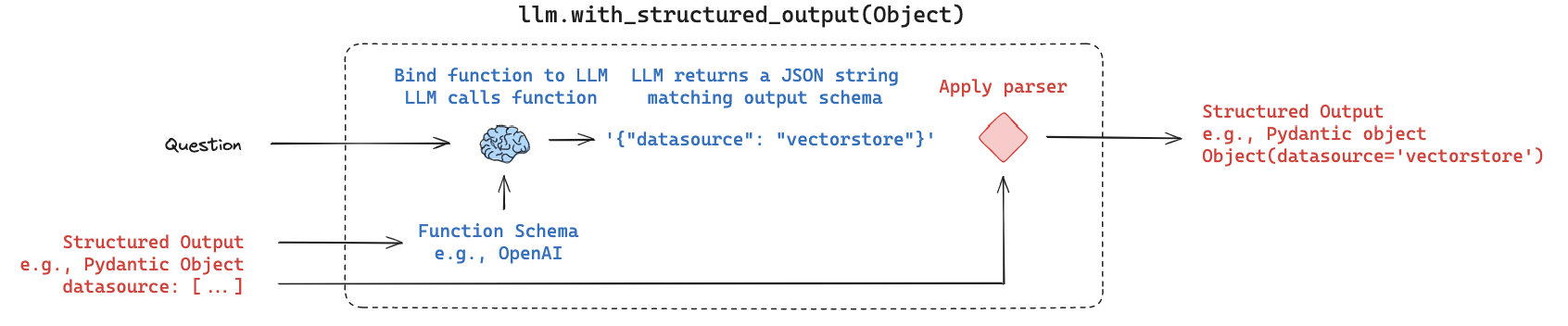
# 带函数调用的LLM
llm = ChatOpenAI(model="gpt-3.5-turbo-0125", temperature=0)
structured_llm = llm.with_structured_output(RouteQuery)

# 提示
system = """你是将用户查询路由到适当数据源的专家。

根据问题所指的编程语言,将其路由到相关数据源。"""

prompt = ChatPromptTemplate.from_messages(
    [
        ("system", system),
        ("human", "{question}"),
    ]
)

# 定义路由器
router = prompt | structured_llm
注意:我们使用函数调用来生成结构化输出。
python
question = """Why doesn't the following code work:

from langchain_core.prompts import ChatPromptTemplate

prompt = ChatPromptTemplate.from_messages(["human", "speak in {language}"])
prompt.invoke("french")
"""

result = router.invoke({"question": question})
python
resultpython
result.datasource一旦我们有了这个,就很容易定义一个使用result.datasource的分支
https://python.langchain.com/docs/expression_language/how_to/routing
python
def choose_route(result):
    if "python_docs" in result.datasource.lower():
        ### 这里的逻辑
        return "chain for python_docs"
    elif "js_docs" in result.datasource.lower():
        ### 这里的逻辑
        return "chain for js_docs"
    else:
        ### 这里的逻辑
        return "golang_docs"

from langchain_core.runnables import RunnableLambda

full_chain = router | RunnableLambda(choose_route)
python
full_chain.invoke({"question": question})追踪:
https://smith.langchain.com/public/c2ca61b4-3810-45d0-a156-3d6a73e9ee2a/r
语义路由
流程:
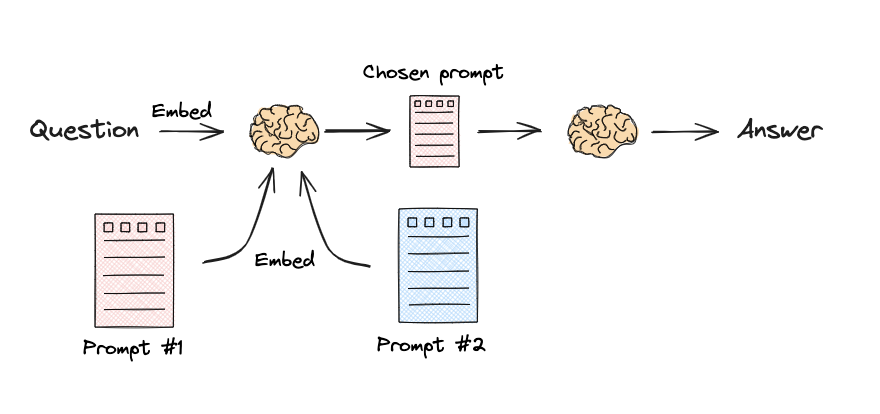
文档:
https://python.langchain.com/docs/expression_language/cookbook/embedding_router
python
from langchain.utils.math import cosine_similarity
from langchain_core.output_parsers import StrOutputParser
from langchain_core.prompts import PromptTemplate
from langchain_core.runnables import RunnableLambda, RunnablePassthrough
from langchain_openai import ChatOpenAI, OpenAIEmbeddings

# 两个提示
physics_template = """你是一位非常聪明的物理学教授。\
你擅长以简洁易懂的方式回答物理问题。\
当你不知道问题的答案时,你承认你不知道。

这是一个问题:
{query}"""

math_template = """你是一位非常优秀的数学家。你擅长回答数学问题。\
你之所以如此优秀,是因为你能够将难题分解为其组成部分,\
回答组成部分,然后将它们组合起来回答更广泛的问题。

这是一个问题:
{query}"""

# 嵌入提示
embeddings = OpenAIEmbeddings()
prompt_templates = [physics_template, math_template]
prompt_embeddings = embeddings.embed_documents(prompt_templates)

# 将问题路由到提示
def prompt_router(input):
    # 嵌入问题
    query_embedding = embeddings.embed_query(input["query"])
    # 计算相似性
    similarity = cosine_similarity([query_embedding], prompt_embeddings)[0]
    most_similar = prompt_templates[similarity.argmax()]
    # 选择的提示
    print("Using MATH" if most_similar == math_template else "Using PHYSICS")
    return PromptTemplate.from_template(most_similar)

chain = (
    {"query": RunnablePassthrough()}
    | RunnableLambda(prompt_router)
    | ChatOpenAI()
    | StrOutputParser()
)

print(chain.invoke("What's a black hole"))
追踪:
https://smith.langchain.com/public/98c25405-2631-4de8-b12a-1891aded3359/r
从零开始的RAG:查询构建
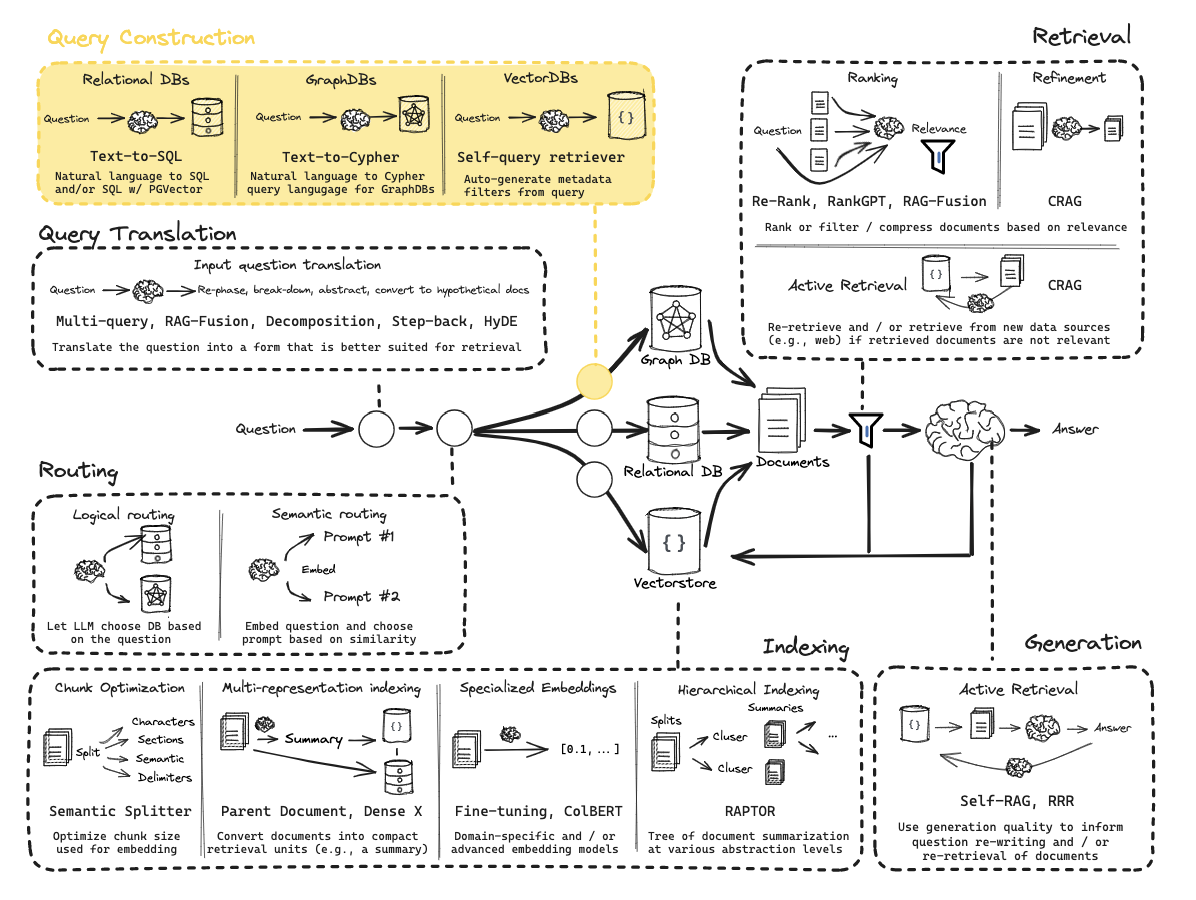
有关图和SQL,请参阅有用资源:
https://blog.langchain.dev/query-construction/
第11部分:元数据过滤的查询结构化
流程:

许多向量存储包含元数据字段。
这使得可以根据元数据过滤特定的块。
让我们看看在YouTube转录数据库中可能看到的一些示例元数据。
文档:
https://python.langchain.com/docs/use_cases/query_analysis/techniques/structuring
python
from langchain_community.document_loaders import YoutubeLoader

docs = YoutubeLoader.from_youtube_url(
    "https://www.youtube.com/watch?v=pbAd8O1Lvm4", add_video_info=True
).load()

docs[0].metadata
假设我们已经构建了一个索引:
- 允许我们对每个文档的
contents和title进行非结构化搜索 - 并对
view count、publication date和length进行范围过滤。
我们希望将自然语言转换为结构化搜索查询。
我们可以为结构化搜索查询定义一个模式。
python
import datetime
from typing import Literal, Optional, Tuple
from langchain_core.pydantic_v1 import BaseModel, Field

class TutorialSearch(BaseModel):
    """在关于软件库的教程视频数据库中搜索。"""

    content_search: str = Field(
        ...,
        description="应用于视频转录的相似性搜索查询。",
    )
    title_search: str = Field(
        ...,
        description=(
            "应用于视频标题的内容搜索查询的替代版本。"
            "应该简洁,只包含可能在视频标题中的关键词。"
        ),
    )
    min_view_count: Optional[int] = Field(
        None,
        description="最小观看次数过滤器,包含。仅在明确指定时使用。",
    )
    max_view_count: Optional[int] = Field(
        None,
        description="最大观看次数过滤器,不包含。仅在明确指定时使用。",
    )
    earliest_publish_date: Optional[datetime.date] = Field(
        None,
        description="最早的发布日期过滤器,包含。仅在明确指定时使用。",
    )
    latest_publish_date: Optional[datetime.date] = Field(
        None,
        description="最新的发布日期过滤器,不包含。仅在明确指定时使用。",
    )
    min_length_sec: Optional[int] = Field(
        None,
        description="最小视频长度(秒),包含。仅在明确指定时使用。",
    )
    max_length_sec: Optional[int] = Field(
        None,
        description="最大视频长度(秒),不包含。仅在明确指定时使用。",
    )

    def pretty_print(self) -> None:
        for field in self.__fields__:
            if getattr(self, field) is not None and getattr(self, field) != getattr(
                self.__fields__[field], "default", None
            ):
                print(f"{field}: {getattr(self, field)}")
现在,我们提示LLM生成查询。
python
from langchain_core.prompts import ChatPromptTemplate
from langchain_openai import ChatOpenAI

system = """你是将用户问题转换为数据库查询的专家。\
你可以访问一个关于构建LLM应用程序的软件库的教程视频数据库。\
给定一个问题,返回一个优化的数据库查询以检索最相关的结果。

如果有你不熟悉的缩写或单词,不要尝试重新措辞它们。"""
prompt = ChatPromptTemplate.from_messages(
    [
        ("system", system),
        ("human", "{question}"),
    ]
)
llm = ChatOpenAI(model="gpt-3.5-turbo-0125", temperature=0)
structured_llm = llm.with_structured_output(TutorialSearch)
query_analyzer = prompt | structured_llm
python
query_analyzer.invoke({"question": "rag from scratch"}).pretty_print()python
query_analyzer.invoke(
    {"question": "videos on chat langchain published in 2023"}
).pretty_print()
python
query_analyzer.invoke(
    {"question": "videos that are focused on the topic of chat langchain that are published before 2024"}
).pretty_print()
python
query_analyzer.invoke(
    {
        "question": "how to use multi-modal models in an agent, only videos under 5 minutes"
    }
).pretty_print()要将其连接到各种向量存储,您可以在这里查看。
评论